






Introduction
In today’s digital world, software rarely works alone. Every time you book a cab, make an online payment, log in using Google, or track an online order, multiple systems are quietly communicating behind the scenes. This invisible communication is powered by APIs.
APIs are not new, but they have become the backbone of modern technology. Understanding APIs is no longer just for developers — it’s essential for founders, product managers, and anyone building digital platforms. This guide explains APIs in a simple, practical, and jargon-free way.
What Is an API?
API stands for Application Programming Interface. In simple terms, an API is a set of rules that allows one software system to communicate with another.
Think of an API as a messenger. One system sends a request, the API carries that request to another system, and then delivers the response back — without exposing internal complexity or direct access.
A Real-World Analogy
Imagine you’re at a restaurant. You don’t walk into the kitchen. Instead, you tell the waiter what you want. The waiter passes your request to the kitchen, the food is prepared, and the waiter brings it back to you.
In this analogy, you are the client application, the waiter is the API, and the kitchen is the backend system. You don’t need to know how the food is cooked — you just need a reliable interface. That’s exactly how APIs work.
Why APIs Exist
Before APIs, software systems were tightly coupled, difficult to scale, and risky to expose directly. APIs solve this by creating a controlled and secure interface between systems.
They enable secure data exchange, modular system design, faster development cycles, and seamless cross-platform integration. Without APIs, modern digital platforms simply wouldn’t exist.
How APIs Work
The process is simple and happens in milliseconds. An application makes a request for data or an action. The API validates the request, checks authorization, and forwards it to the backend. The system processes it and returns a structured response, usually in formats like JSON.
Common API Use Cases
Everyday Digital Experiences
APIs power login with Google or Apple, payment gateways, maps and location services, weather apps, social media integrations, analytics dashboards, and AI platforms. Whenever systems need to communicate, APIs act as the shared language.
Types of APIs
Internal APIs
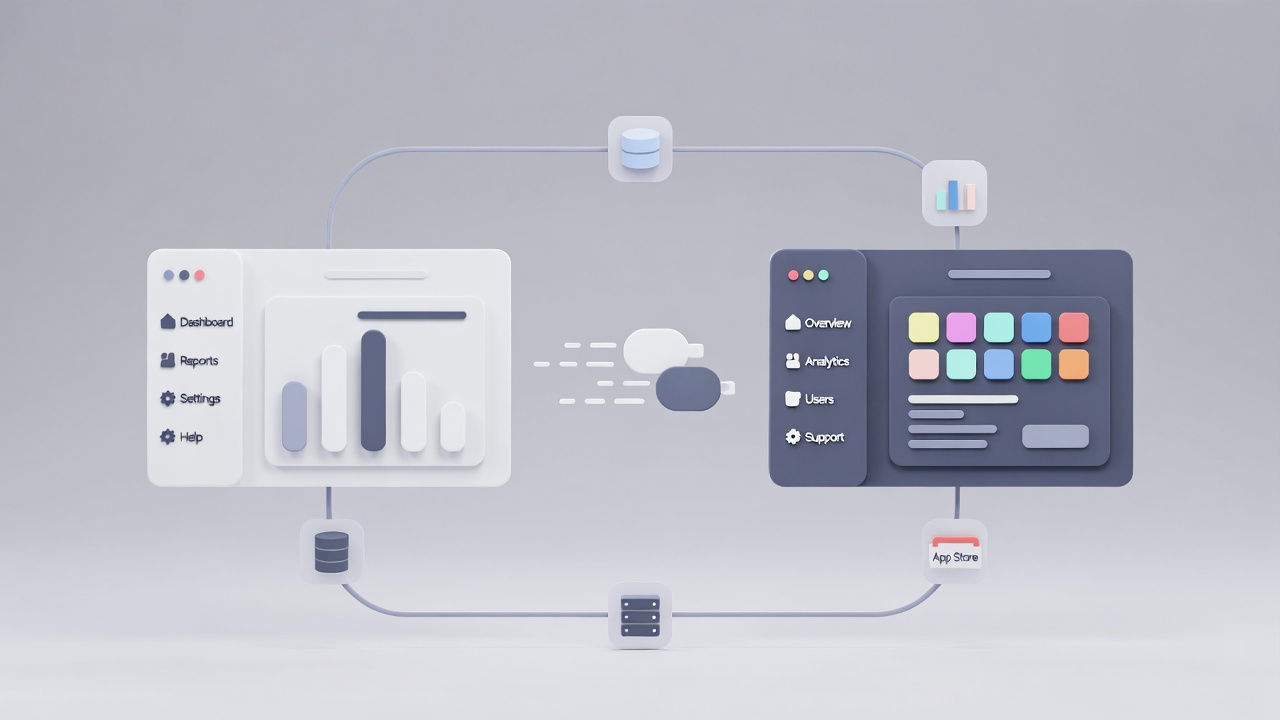
Internal APIs are used within organizations to connect systems, such as a CRM communicating with an analytics dashboard.
Public APIs
Public APIs are exposed to external developers, such as Google Maps APIs or AI service APIs, enabling innovation beyond a single platform.
Partner APIs
Partner APIs are shared with selected partners, commonly used in payment systems and enterprise integrations.

APIs in Modern Software Architecture
Modern software is modular, scalable, and distributed. APIs allow frontend and backend systems to evolve independently, enable mobile and web apps to share the same backend, and make it possible to aggregate data from multiple sources.
APIs and AI
AI systems don’t work in isolation. They rely on APIs to access data, send predictions, trigger actions, and integrate into real workflows. APIs are what turn AI from theory into real-world impact.
- Secure data access through authentication and permissions
- Scalable system integration across platforms
- Faster product development and innovation
Why Understanding APIs Matters
Whether you’re building a digital platform, a software product, or an AI-powered system, APIs play a critical role. Understanding them helps you make better product decisions, avoid vendor lock-in, design scalable systems, and communicate effectively with technical teams.
Final Thoughts
APIs are not just technical tools — they are connectors that enable ecosystems and allow innovation to scale. Most modern products are built by intelligently combining systems through APIs rather than building everything from scratch.
At Vyntrak, we believe that understanding how technology truly works is the first step toward building systems that solve real-world problems — today and in the future.